PDF Download p53: The Gene that Cracked the Cancer Code, by Sue Armstrong
Currently this publication exists for you the book fans. Or are you not kind of book lover? Don't bother, you could likewise read this book as others. This is not type of obligated book to refer for sure neighborhood. But, this book is additionally referred for everybody. As understood, everybody could obtain the breakthroughs and also understanding from all book kinds. It will depend upon the individual taste as well as needs to read certain publication. As well as one more time, P53: The Gene That Cracked The Cancer Code, By Sue Armstrong will certainly be readily available for you to obtain that you need and want.
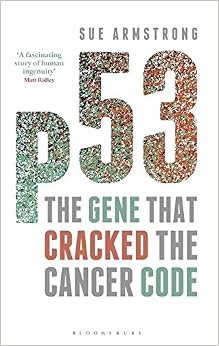
p53: The Gene that Cracked the Cancer Code, by Sue Armstrong

PDF Download p53: The Gene that Cracked the Cancer Code, by Sue Armstrong
Currently, what do you think about the emerging books this time around? Many books exist and also published by lots of publishers, from several countries in this globe. Yet, have you to be much more careful to choose one of the very best. If you are confused on exactly how you choose the book, you can take from the topic to offer, the author, and also the recommendation.
As introduction, we are the most effective internet site that has hundreds books from many sources in this world. You can locate many kinds and genres of publications such as the business economics, religious beliefs, lessons, entrepreneurship, organisation, national politics, and many more. They re all from the large expert authors and also released by popular publishers in the world. Among the collections that are very competitive is P53: The Gene That Cracked The Cancer Code, By Sue Armstrong
The factors that make you have to read it is the related subject to the condition that you truly want right now. When it's going to make better opportunity of reading materials, it can be the way you have to take in the same ways. Yeah, the ways that you can delight in the time by checking out P53: The Gene That Cracked The Cancer Code, By Sue Armstrong, the time that you could make use of to do great activity, and the time for you to acquire exactly what this book supplies to you.
To read P53: The Gene That Cracked The Cancer Code, By Sue Armstrong, you might refrain complex means. In this period, the provided online book is below. Seeing this web page becomes the starter for you to find this publication. Why? We provide this kind of book in the checklist, among the hundreds of book collections to find. In this page, you will locate the link of this book to download and install. You can follow up the book because web link. So, when you actually require this book asap, subsequent exactly what we have informed for you below.
Review
“Ms. Armstrong’s book comes alive in the sections where she explores cancer’s human toll . . . She also captures the excitement of researchers as they come upon eureka moments.†―The Wall Street Journal“She covers every aspect of cancer development, giving us a sense of how this evasive illness persists, even in the face of modern medicine . . . As Armstrong paints a picture of hope in the book, she apologizes for the slow progress that medical science makes. With her optimistic outlook, we can sleep better at night knowing that someone’s at the helm.†―San Francisco Book Review“As in the best travel writing, it’s not the destination that’s important here, but the journey. This is not only a story about the gene on chromosome 17, nor only about the nature of cancer, but also about how science works.†―The Boston Globe“A succinct, accessible study of humanity's genetic bulwark against cancer.†―Nature“A brilliant narrative that captures the essence of the scientific challenges faced by researchers in this pursuit and the progress that has been made in our understanding of p53.†―Science Magazine“Armstrong’s book is genuinely engrossing on many levels, and the story is very well told. It has considerable depth, yet sufficient clarity to be able to reach a wide audience.†―Cell Magazine“Armstrong adroitly untangles the complex story of this impressive gene.†―Booklist
Read more
About the Author
Sue Armstrong is a science writer and foreign correspondent who has worked for a variety of media organizations, including New Scientist and BBC World Service. Since the 1980s, she has undertaken regular assignments for the World Health Organization (WHO) and UNAIDS, writing about women's health issues and the AIDS pandemic, among many other topics. The author of A Matter of Life and Death: Inside the Hidden World of the Pathologist, Armstrong lives in Edinburgh, Scotland.
Read more
Product details
Hardcover: 288 pages
Publisher: Bloomsbury Sigma; 1 edition (February 24, 2015)
Language: English
ISBN-10: 1472910516
ISBN-13: 978-1472910516
Product Dimensions:
5.6 x 1.1 x 8.7 inches
Shipping Weight: 15.5 ounces (View shipping rates and policies)
Average Customer Review:
4.4 out of 5 stars
39 customer reviews
Amazon Best Sellers Rank:
#346,053 in Books (See Top 100 in Books)
Overall, I enjoyed this book. It is as advertised, a book focused exclusively on one gene and how it relates to cancer. The author goes into great detail of how the gene was discovered and how it was originally misdiagnosed as a gene which causes cancer before its true nature was discovered. Of particular interests was the chapter, “The Smoking Gun†which discussed the discovery of how smoking caused a mutation at a specific location in this gene. It is this mutation which make people susceptible to cancer and this discovery which eventual led the cigarette companies to admit the truth. This was a particularly quick read. I would have preferred if the book strayed beyond the P53 gene and discuss more of the other genes related to cancer. Although well written, I am not sure there was enough information about just this one gene for an entire book. When reading the book and following through the scientific discoveries, the author would at times bring up a new scientist/researcher which she would then introduce in the book. She went into significant detail not only about the researcher’s life, but also about her interview with the researcher. She would discuss details about his house, expression property, etc. (almost like filler material). I found this to be more of a distraction and after reading this, I needed to go pack a few pages to remember what the topic of research was being discussed. Despite this one critique, I found this book to be very good and would recommend it to anyone interested in cancer research.
Fun and informative, this is worth a read. There is essentially no science here, and after a while the obligatory human interest nuggets which are the prelude to each new topic become a little irritating. P53 is an incredibly relevant protein in cancer and aging, but too little of its scientific contradictions and complexities come across. If the outcome of this read is to provoke curiosity but not satisfy it, it succeeds. This is in itself is a worthwhile objective, but fundamentally disappointing.
“… a gene that goes by the prosaic name of p53 - bestowed on it simply because it makes a protein with a molecular weight of 53 kilodaltons.†– from p53: THE GENE THAT CRACKED THE CANCER CODEp53: THE GENE THAT CRACKED THE CANCER CODE by Sue Armstrong seems to be a reasonably comprehensive overview of the topic that even those with but a modicum knowledge level of genetics and biochemistry should find readable and comprehensible.The author jumps back and forth in time to show how the aggregate work of a multitude of researchers accumulated and built on itself to arrive at the understanding we have today about p53. This lends the narrative a choppiness which might have been ameliorated at the conclusion if Armstrong had provided a concise summary of the scientific findings to date. This she failed to do and the book suffers somewhat for its absence.p53: THE GENE THAT CRACKED THE CANCER CODE is, however, a commendable contribution to the popular science genre.
Although I have been somewhat familiar with the p53 literature for a number of years, I was greatly informed and entertained by this narrative; the author does a fine job of weaving the science with the mystery of this extremely important transcription factor. The book hits on so many areas of cell and molecular biology in a very understandable and human way that I am even considering adopting it as supplemental reading for my college-level intro to cell biology and genetics course.
Some nice but extraneous minutia of the people involved in p53's discovery, but their achievements and the science of p53 itself are pretty clearly explained. After reading it, you get a good sense of how important p53 is as a target for future cancer therapies. The book makes you realize the complexity of the p53 (and presumably other tumor suppressor gene) pathways. Kevetrin is one compound with promise to target p53. There is already hope.
Interesting story. I am an oncologist (cancer specialist), and so I would have appreciated MORE esoteric detail. I think most careful lay readers would be satisfied with the detail provided, and will understand what was being described in the book. The degree of technical detail remind me of a Stephen Hawkins book on the cosmos.Armstrong does a nice job of describing the history of p53, from its discovery to the present time. It helped me with perspective, and was a very interesting, if not comprehensive review.It is absolutely true that p53 is one of the most important cancer related abnormalities in humans. Unfortunately, it is a tough nut to crack, from a therapeautic standpoint. I think people interested in one of the most important causes of cancer will enjoy this book.
Generally a good overview of recent research involving discoveries about the properties of the p53 gene and its role in repairing damaged cell DNA. I took off one star, however, because the book seemed poorly organized and difficult to follow.
Fascinating biography of the "guardian of the genome" and sheds light on cancer research. I enjoyed it especially read in tandem with the Emperor of all Maladies: a Biography of cancer.
p53: The Gene that Cracked the Cancer Code, by Sue Armstrong PDF
p53: The Gene that Cracked the Cancer Code, by Sue Armstrong EPub
p53: The Gene that Cracked the Cancer Code, by Sue Armstrong Doc
p53: The Gene that Cracked the Cancer Code, by Sue Armstrong iBooks
p53: The Gene that Cracked the Cancer Code, by Sue Armstrong rtf
p53: The Gene that Cracked the Cancer Code, by Sue Armstrong Mobipocket
p53: The Gene that Cracked the Cancer Code, by Sue Armstrong Kindle

Tidak ada komentar :
Posting Komentar